- qiuyueyun@lyunite.com
- Add: Room 1502, Unit 1, Building 5, No.1 Wuxing Road, Xinluo District, Longyan City, Fujian Province

The hydraulic pump is the heart of a hydraulic system, hydraulic oil is the blood, and hydraulic filtration equipment is the lung of the entire hydraulic circuit. Just as human lungs filter dust and impurities from inhaled air, hydraulic filters continuously capture metal wear debris, silica dust, sludge, water and oxidation particles circulating in hydraulic oil, purifying the fluid and maintaining a clean internal circulation environment for all hydraulic components.
Industry data shows that 75%–95% of hydraulic system failures stem from oil contamination. Tiny invisible particles of 1–5 microns scratch precision spools, abrade pump pistons, wear cylinder seals and block valve orifices, triggering slow action, internal leakage, overheating and even sudden equipment shutdown. Advanced hydraulic filtration technology solves these hidden risks fundamentally. This article explains the core value of hydraulic filtration, working principles, filter classification, selection standards and maintenance tips for industrial and mobile hydraulic equipment.
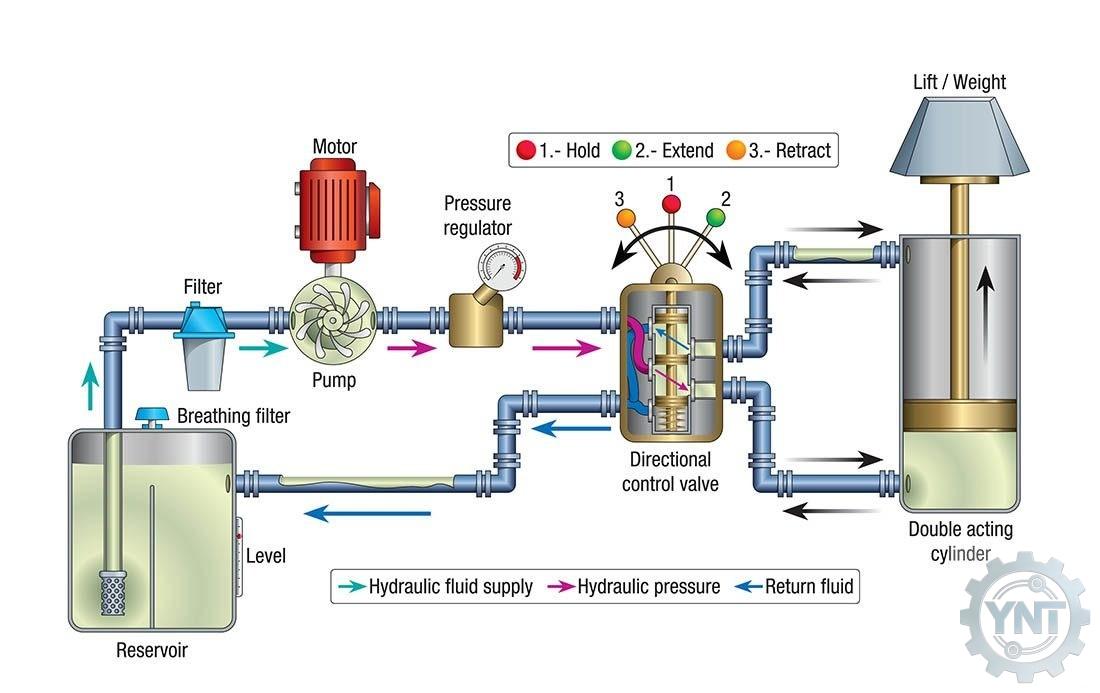
Hydraulic oil cycles repeatedly between the tank, pump, valve block and cylinder. Internal wear generates metal powder during operation, while external dust, rainwater and assembly residues invade the circuit via worn rod seals and tank breathers. Without filtration, these pollutants keep circulating like toxic dust in unfiltered air, causing cumulative damage to precision parts.Hydraulic filters “breathe” for the system: they intercept impurities in each oil circulation, lower overall contamination concentration, and stop the vicious cycle of wear debris creating more abrasive particles.
Hydraulic Pumps: Gear pumps, piston pumps have tiny internal clearances. Micro particles squeeze between gear teeth or piston shoes, accelerating surface abrasion, raising noise and reducing volumetric efficiency. Clean oil via filtration cuts pump replacement frequency by 60%+.
Proportional / Servo Valves: Multi-way valves and proportional valves rely on micron-level matching spools. Even 3μm particles scratch control edges, leading to drift, jamming and inaccurate flow regulation. High-precision filtration maintains valve control stability.
Hydraulic Cylinders: Contaminants scratch chrome piston rods and internal barrel walls, destroying sealing surfaces and causing persistent external oil leakage. Reliable filtration reduces seal wear drastically.
Contaminated oil increases internal friction and flow resistance, forcing motors to consume extra power and raising system temperature. Qualified filtration keeps oil clean, reducing energy loss, slowing oil oxidation and extending hydraulic oil replacement cycles. Enterprises save huge costs on component repairs, oil replacement and production downtime.
Hydraulic filtration relies on multi-layer filter media to trap pollutants via three physical mechanisms:
Surface Filtration: Large particles are blocked on the outer surface of filter media;
Depth Filtration: Ultra-fine fibers inside the element capture 1–10μm micro silt particles;
Coalescence Filtration: Special glass fiber layers separate free water mixed in hydraulic oil to avoid corrosion and additive failure.
Two core technical indicators judge filter performance:
Beta Ratio (β Value): The standard efficiency index per ISO 16889. β₁₀=200 means 99.5% of 10μm particles are intercepted, the core standard for high-performance filters.
Differential Pressure: The pressure drop across the filter element. When the element absorbs pollutants and clogs, differential pressure rises to trigger the bypass valve, preventing system oil starvation.
All filtration standards follow the ISO 4406 fluid cleanliness classification, which divides oil cleanliness into grades based on particle quantity per milliliter. Precision proportional systems require ISO 14/11, while general construction machinery meets ISO 18/15.
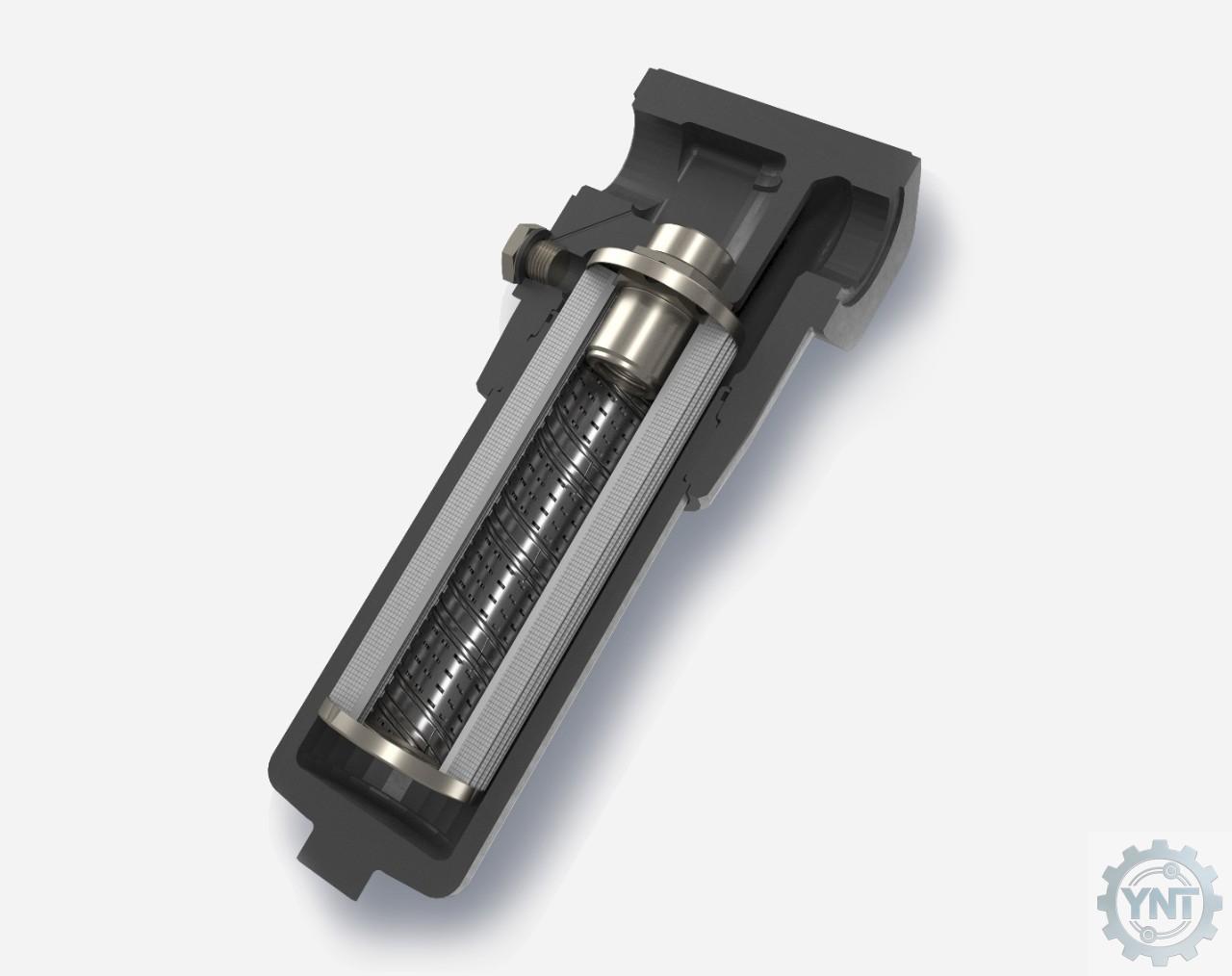
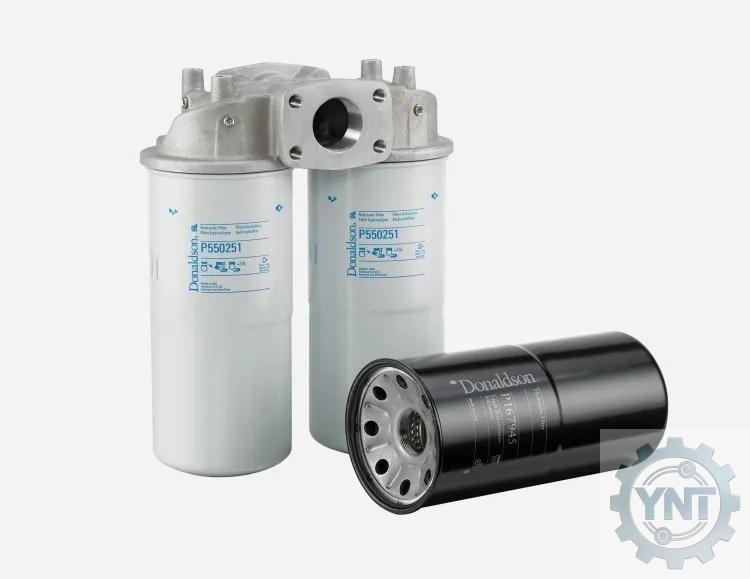
Filters are installed at different circuit positions to form a complete multi-stage filtration lung system, each with unique protection functions:
Installed at the pump oil suction port inside the tank, usually 80–150μm coarse filter mesh. It blocks large foreign objects (metal scraps, rubber fragments) to avoid sudden pump damage. It is the first defensive lung of the whole system.Applicable: All hydraulic power units, mini hydraulic stations.
Mounted between pump outlet and control valve block, rated for system working pressure up to 420bar. Adopts 3–10μm glass fiber filter elements to filter ultra-fine wear particles before oil enters precision valves and cylinders. This is the most critical filtration component for high-pressure systems.Applicable: Proportional multi-way valve systems, hydraulic presses, aerial work platforms, mining machinery.
The most widely used filter, installed on the oil return pipeline before fluid flows back to the tank. It captures all wear debris generated by cylinders, motors and valve groups during operation, preventing pollutants from accumulating in the oil tank and re-entering the pump. It acts as the main exhaust lung of the hydraulic circuit.Applicable: Sanitation trucks, loaders, agricultural machinery, general industrial hydraulic stations.
Mounted on the tank filler cap. When oil level rises/falls during cylinder extension and retraction, air enters and exits the tank. The breather filter blocks outdoor dust, moisture and rainwater to avoid external contamination invading the oil tank. It is the respiratory mask of the hydraulic system’s oil storage chamber.
Equipment: Garbage trucks, hook lifts, mini loaders, aerial liftsMatching scheme: 10μm return line filter + suction strainer + tank air breatherCleanliness target: ISO 18/15Core demand: Anti-vibration, large dirt holding capacity, long filter replacement cycle for outdoor dusty working conditions.
Equipment: Hydraulic presses, servo automated production lines, CNC machine toolsMatching scheme: 3μm high-pressure filter + 5μm return filter + coalescing water removal filterCleanliness target: ISO 14/11Core demand: Ultra-fine filtration to protect proportional/servo valves, stable control without drift.
Equipment: Mining hydraulic supports, large drill rigs, heavy cranesMatching scheme: Duplex parallel high-pressure filters + large-flow return filter + water removal filter elementCleanliness target: ISO 16/13Core demand: Strong anti-clogging performance, duplex design allows filter replacement without system shutdown.
Using low micron filter elements blindly: Excessively fine elements cause frequent clogging, rising differential pressure and bypass valve opening, all unfiltered oil flows directly into the system, losing filtration function.
Ignoring the tank breather filter: Damaged or missing breathers let dust and rainwater enter the tank, making all downstream filters overloaded and ineffective.
Delaying filter replacement: Saturated filter elements lose interception ability, captured pollutants fall off and re-circulate, accelerating component wear.
Mismatched filter housing pressure grade: Installing low-pressure return filters on high-pressure pipelines leads to housing deformation and element breakdown under system peak pressure.
Mixing unqualified filter media: Low-cost paper filter elements have low Beta ratios, cannot intercept micro silt, and deform easily under oil pressure.
Our factory provides one-stop customized hydraulic filtration equipment to match unique system parameters:
Custom filter precision: 1μm, 3μm, 5μm, 10μm, 20μm glass fiber, stainless steel wire mesh filter elements optional;
Custom pressure grade: Low-pressure return filters (10–25bar), medium-pressure filters (160bar), high-pressure filters up to 420bar;
Custom flow specification: 5L/min–300L/min large-flow filter housings for mini power units and heavy industrial stations;
Custom structural accessories: Differential pressure indicators, bypass valves, duplex switching valves, water coalescing layers;
Custom thread & installation: BSP, NPT, metric port threads, side-mounted / top-mounted / tank integrated filter housings;
Special working condition customization: Explosion-proof filters for chemical equipment, low-temperature resistant filters for northern mining, stainless steel anti-corrosion filters for marine hydraulic systems.
Contact: Mr.Qiu
Phone: 18959452627
E-mail: qiuyueyun@lyunite.com
Whatsapp:
Add: Room 1502, Unit 1, Building 5, No.1 Wuxing Road, Xinluo District, Longyan City, Fujian Province